
How one word in Florida law creates three separate protections for your home, and the ballot measure this November that could reshape one of them
Key Takeaways

- Florida’s constitution actually creates three separate homestead protections: shelter from forced sale by most creditors, a reduction in property taxes, and restrictions on who can inherit the home. They work independently of each other.
- Creditor protection is automatic and has no dollar limit. The property tax exemption is not automatic and requires an application with the county property appraiser by March 1.
- The Save Our Homes cap limits how much your home’s taxable value can rise each year, and that saved benefit can move with you to a new Florida home through portability.
- A revocable living trust can hold your homestead without losing either protection, but only if the trust is drafted to preserve your personal right to live there.
- Florida voters decide a major property tax amendment on November 3, 2026, that would significantly raise the non-school homestead exemption starting in 2027.
- None of these protections substitutes for a coordinated estate plan. How your homestead passes at your death depends on family circumstances that a will or trust needs to address directly.
One Word, Three Different Protections
Florida has managed to make one word do three unrelated jobs. That is why homeowners, lawyers, and government offices so often talk past one another about “homestead.” The Florida Supreme Court has described the underlying purpose of homestead as sheltering a family from the misfortune of losing the roof over its head. See Public Health Trust of Dade County v. Lopez, 531 So. 2d 946 (Fla. 1988). But Florida pursues that purpose through three separate rules, each with its own qualifications, paperwork, and traps.
The first is protection from forced sale by most creditors. The second is a reduction in the property taxes you owe. The third is a restriction on who can inherit the home when you die if you are survived by a spouse or minor child. Qualifying for one does not automatically give you the others, and losing one does not automatically cost you the others. This article walks through each, then looks at a ballot measure that could change one of them this year.
Protection From Forced Sale by Creditors
Article X, Section 4 of the Florida Constitution protects a Florida homestead from being sold to satisfy most money judgments, no matter how much the home is worth. There is no dollar cap on the equity protected. A judgment for a car accident, a business debt, a credit card balance, or most malpractice claims generally cannot force the sale of a properly qualified Florida homestead, however large that judgment or however valuable the home.
To qualify, the property generally must be the owner’s permanent residence, actually occupied (or about to be, with a documented intent to occupy), and owned by a natural person rather than a corporation or an LLC. Courts have long recognized that a temporary absence, for medical treatment, military service, or similar reasons, does not defeat the protection if the owner intends to return. The protected homestead is limited to one-half acre if the property is within a municipality, or 160 contiguous acres outside one.
This protection is automatic. You do not file anything with a court, apply to any state agency, or wait for a determination before it attaches. It exists the moment the property becomes your permanent residence, and it exists independently of the property tax exemption discussed below, which does require an application.
What This Protection Does Not Cover
The forced-sale protection has real exceptions, and Florida homeowners are sometimes surprised by which debts can reach the home:
- A mortgage, home equity loan, or other lien you voluntarily granted on the property. The protection was never designed to let you borrow against the home and then refuse to pay.
- Unpaid property taxes and government assessments on the property itself. See Fla. Stat. § 197.502.
- A contractor’s or subcontractor’s lien for work actually performed on the home, if the statutory notice and recording requirements were followed. See Fla. Stat. ch. 713.
- An unpaid homeowners’ or condominium association assessment lien. See Bessemer v. Gersten, 381 So. 2d 1344 (Fla. 1980), Fla. Stat. § 720.3085, and Fla. Stat. § 718.116.
- A federal tax lien. Federal law can override the state homestead exemption and authorize judicial sale under 26 U.S.C. § 7403. See United States v. Rodgers, 461 U.S. 677 (1983).
- An equitable lien imposed because the homestead was purchased with money obtained through theft, embezzlement, or a breach of fiduciary duty. See Havoco of America, Ltd. v. Hill, 790 So. 2d 1018 (Fla. 2001).
- In bankruptcy specifically, federal law can cap recently acquired homestead equity and reduce an exemption when nonexempt assets were converted into homestead with the intent to hinder, delay, or defraud a creditor. See 11 U.S.C. §§ 522(o) and 522(p). Ordinary prospective planning is not the same thing as a last-minute fraudulent conversion, but the line depends heavily on timing, intent, and the facts.
The Property Tax Exemption: A Completely Separate Benefit
Article VII, Section 6 of the Florida Constitution and Fla. Stat. § 196.031 create a different benefit entirely: a reduction in the taxable assessed value of your home. The first $25,000 of assessed value is exempt from all property taxes, including school taxes. An additional exemption applies to the portion of assessed value between $50,000 and $75,000, but only for non-school taxes, and that additional amount is adjusted each year for inflation. For 2026, the combined exemption most homeowners receive is $51,411. See the Florida Department of Revenue’s 2026 exemption schedule.
Unlike creditor protection, this benefit is not automatic. You must apply using Form DR-501 with your county property appraiser, ordinarily by March 1 of the tax year. A person who misses the deadline may still seek late relief within the statutory period after the TRIM notice by showing extenuating circumstances, but should not count on receiving it. See Fla. Stat. § 196.011. Once granted, the exemption renews automatically each year unless your circumstances change, for example if the home stops being your permanent residence. Late relief exists, but betting a valuable tax benefit on an exception is foolish.
The Save Our Homes Cap
Once you have the homestead exemption, a second and often more valuable benefit begins the following year: the Save Our Homes assessment cap. Under Fla. Stat. § 193.155, the assessed value used to calculate your property taxes cannot increase by more than 3%, or the change in the Consumer Price Index if that is lower, in any year, no matter how much the home’s market value rises. Over time, in a fast-appreciating market, the gap between what your home is worth and what it is taxed on can become substantial. That gap is the Save Our Homes benefit, and it disappears when you sell or the home stops being your permanent residence.
That is where portability comes in. If you give up one Florida homestead and establish a new one, Fla. Stat. § 193.155(8) lets you carry up to $500,000 of that accumulated Save Our Homes benefit to the new home, reducing its taxable value from day one. To qualify, you generally must have received the homestead exemption on the former home in one of the three immediately preceding years, so the timing of a sale and purchase matters more than most people realize.
Other Exemptions Worth Knowing About
Florida layers several additional, narrower exemptions on top of the basic homestead exemption, some automatic by statute and some available only if a county or city has adopted them locally:
- A $5,000 exemption for a widow or widower who has not remarried. See Fla. Stat. § 196.202.
- A $5,000 exemption for a person who is totally and permanently disabled. See Fla. Stat. § 196.202.
- An income-based homestead discount for veterans age 65 or older with a combat-related disability, generally calculated as a percentage matching the veteran’s service-connected disability rating. See Fla. Stat. § 196.082.
- A total exemption for qualifying veterans, and for qualifying first responders, who are totally and permanently disabled as a result of their service. See Fla. Stat. § 196.081 and Fla. Stat. § 196.102.
- An exemption for certain deployed military service members. See Fla. Stat. § 196.173.
- An additional exemption, generally up to $50,000, for qualifying low-income senior residents, available only in counties and municipalities that have adopted it locally. A separate local option may exempt the full assessed value for certain owners age 65 or older who meet long-term residency and income requirements. See Fla. Stat. § 196.075.
Each of these has its own eligibility documentation and its own application. None of them changes the analysis for the creditor-protection homestead discussed earlier, which has nothing to do with age, income, disability, or veteran status.
Homestead Held in a Trust
Many of my clients hold their home in a revocable living trust as part of a broader estate plan, and a common worry is whether doing so costs them either the creditor protection or the tax exemption. Done correctly, it costs neither. In Engelke v. Estate of Engelke, 921 So. 2d 693 (Fla. 4th DCA 2006), the court recognized that homestead titled in a revocable trust retained its constitutional protection.
For the tax exemption, Fla. Stat. § 196.041 focuses on whether the trust instrument grants the resident a beneficial interest in the property for life. A clearly documented lifetime right to use and occupy the home is ordinarily how that interest is expressed. The retained power to revoke or amend a revocable trust separately supports the conclusion that the settlor remains the functional owner for creditor-protection purposes; it is not an additional element of § 196.041’s tax test. All trusts I write for Florida residents include express homestead and occupancy language. A transfer between legal and equitable title ordinarily does not reset Save Our Homes when the same person remains entitled to the exemption and no additional person applies. See Fla. Stat. § 193.155(3)(a)1.b.
A trust is not a magic word that makes every deed work. A trust drafted for another state, copied from the internet, or vague about the resident’s right to occupy the home can needlessly put both homestead benefits at risk. If your home is in a trust, or you are considering putting it in one, have the actual language reviewed by an experienced Florida estate-planning lawyer.
What Happens to the Homestead When You Die
The third homestead rule has nothing to do with creditors or taxes. Article X, Section 4(c) of the Florida Constitution, Fla. Stat. § 732.401, and Fla. Stat. § 732.4015 restrict how homestead may pass when the owner is survived by a spouse, a minor child, or both. If the owner is survived by a minor child, the homestead is not subject to devise. If the owner is survived by a spouse but no minor child, the homestead may be devised only to the spouse. When homestead is not validly devised and the owner leaves a spouse and descendants, the spouse ordinarily receives a life estate, but a 2010 statutory amendment allows the spouse to elect an undivided one-half interest as a tenant in common, with the remaining one-half passing to the descendants.
These restrictions exist regardless of how the owner feels about a particular spouse or child at the time the will is written, and they surprise people more often than any other homestead rule. A will or trust that does not account for them can create real problems in probate, sometimes years after it seemed like a settled plan. Florida does not disregard them because the family thinks the result is unfair or because the will says something else.
The November 2026 Ballot Measure Homeowners Should Know About
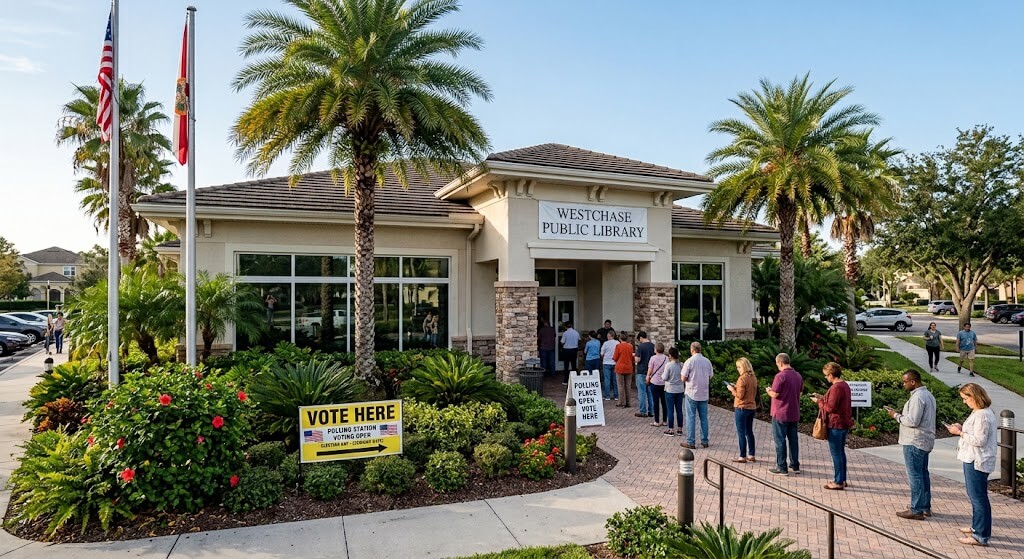
On November 3, 2026, Florida voters will decide Amendment 3, which originated as CS/HJR 1-F under the legislative title “Save Our Homes from Excessive Property Taxes.” After a Leon County judge found the original ballot title and summary defective, the ballot title was rewritten as “Increased Homestead Exemption, Lower Cap on Increases in Non-Homestead Property Assessments.” The amendment needs 60% approval to pass. See the Florida Division of Elections’ 2026 constitutional-amendment booklet and the Florida Senate’s official legislative summary.
If it passes, the current $25,000 exemption that applies to all levies, including school taxes, would apply only to school taxes going forward. For people who maintained permanent Florida residence as of December 31, 2026 and have established or later establish homestead, a new exemption from non-school levies would reach $150,000 beginning January 1, 2027 and $250,000 beginning January 1, 2028, with positive inflation adjustments beginning in 2029. People who establish Florida residence on or after January 1, 2027 would receive a $50,000 non-school exemption, adjusted for positive inflation, and would become eligible for the larger exemption beginning with the fifth year. The annual assessment-increase cap for non-homestead property, including rental homes and commercial property, would also drop from 10% to 5%. See the official legislative summary.
The measure would also direct the Legislature to establish a uniform procedure through which counties and municipalities could increase the exemption toward the property’s full assessed value, and it would restrict the purposes for which counties and municipalities may use remaining ad valorem tax revenue. It does not alter the constitutional creditor-protection homestead or the devise restrictions discussed earlier. Whatever the outcome in November, the figures in the tax-exemption section above state the law before the vote; if the amendment passes, several change beginning with the 2027 tax year.
Common Mistakes Worth Avoiding
- Assuming that applying for the property tax exemption is what protects your home from creditors. It is not. The two benefits are legally unrelated, and you can have creditor protection without ever filing for the tax exemption.
- Missing the ordinary March 1 filing deadline the year after you buy and move in. Florida law provides a limited late-filing procedure for applicants who can show extenuating circumstances, but the safest course is to file on time. See Fla. Stat. § 196.011.
- Selling and buying a new Florida home without checking the portability timeline first. The order and timing of the sale and purchase can determine whether you keep an accumulated Save Our Homes benefit that may be worth much more than the base exemption itself.
- Assuming a home in a trust automatically keeps both protections. It usually can, but only if the trust document actually grants the possessory and beneficial interest the law requires. The word “trust” on a deed proves very little by itself.
- Writing a will as though homestead were just another asset to give away. If you have a spouse, minor children, or both, the homestead devise restrictions may override what the will says.
Frequently Asked Questions
Does everyone who owns a home in Florida get homestead creditor protection automatically?
No. Only a permanent residence that the owner actually occupies, or intends to occupy, qualifies. A second home, a rental property, or a vacant lot does not.
Do I have to apply for homestead protection from creditors?
No. That protection is automatic under the Florida Constitution once the home becomes your permanent residence. The property tax exemption is a separate benefit that does require an application.
What is the deadline to apply for the homestead property tax exemption?
March 1 of the tax year, filed with your county property appraiser using Form DR-501.
Can a creditor ever force the sale of my Florida homestead?
Yes, in specific situations: a mortgage or other lien you voluntarily granted, unpaid property taxes or assessments, a properly perfected contractor’s lien, an HOA or condominium assessment lien, a federal tax lien, or an equitable lien based on fraud or similar misconduct. Ordinary judgment debts, such as credit card balances, most malpractice judgments, and personal injury verdicts, generally cannot reach it. See Fla. Const. art. X, § 4, 26 U.S.C. § 7403, and Havoco.
Does putting my house in a trust destroy the homestead protections?
Not if the trust and deed are drafted correctly. For tax purposes, the trust should grant you a beneficial interest in the property for life, ordinarily expressed as an enforceable lifetime right to use and occupy the home. A revocable trust’s retained revocation power separately supports continued constitutional ownership. See Fla. Stat. § 196.041 and Engelke.
What is the Save Our Homes cap?
A limit on how much your home’s assessed value for tax purposes can increase each year, generally the lesser of 3% or the change in the Consumer Price Index, beginning the year after you receive the homestead exemption.
What is portability?
The ability to carry up to $500,000 of your accumulated Save Our Homes assessment difference from a prior Florida homestead to a new one when you received the homestead exemption on the former home in one of the three immediately preceding years. See Fla. Stat. § 193.155(8).
Who inherits my homestead if I do not address it in my estate plan?
Florida law restricts who can inherit a homestead if you are survived by a spouse, a minor child, or both, regardless of what your will says. The specific rule depends on which of those survive you.
Is Florida about to change these tax exemption numbers?
Voters decide on November 3, 2026 whether to increase the non-school homestead exemption, lower the annual assessment-growth cap for non-homestead property, and make related changes. The figures in this article reflect the law before that vote. See the official 2026 constitutional-amendment booklet.
Does the property tax exemption protect my home from creditors?
No. The two benefits are legally separate. It is possible to have one without the other, though most owner-occupied Florida homes qualify for both.
Homestead Is One Piece of a Coordinated Plan
Your house does not read your will, coordinate its own tax exemption, or warn your trustee that the deed and trust contradict each other. Creditor protection, tax savings, and inheritance rules all attach to the same property, but they do not coordinate themselves. That is what the estate plan is supposed to do.
For a related look at how Florida married couples can add creditor protection to jointly owned investment accounts, see the Verras Law guide to tenancy by the entirety for brokerage accounts.
To review how your homestead fits into your complete estate plan, contact Verras Law, P.A. to schedule a consultation.